Fall and Winter Night Driving Practice for NJ Permit Drivers
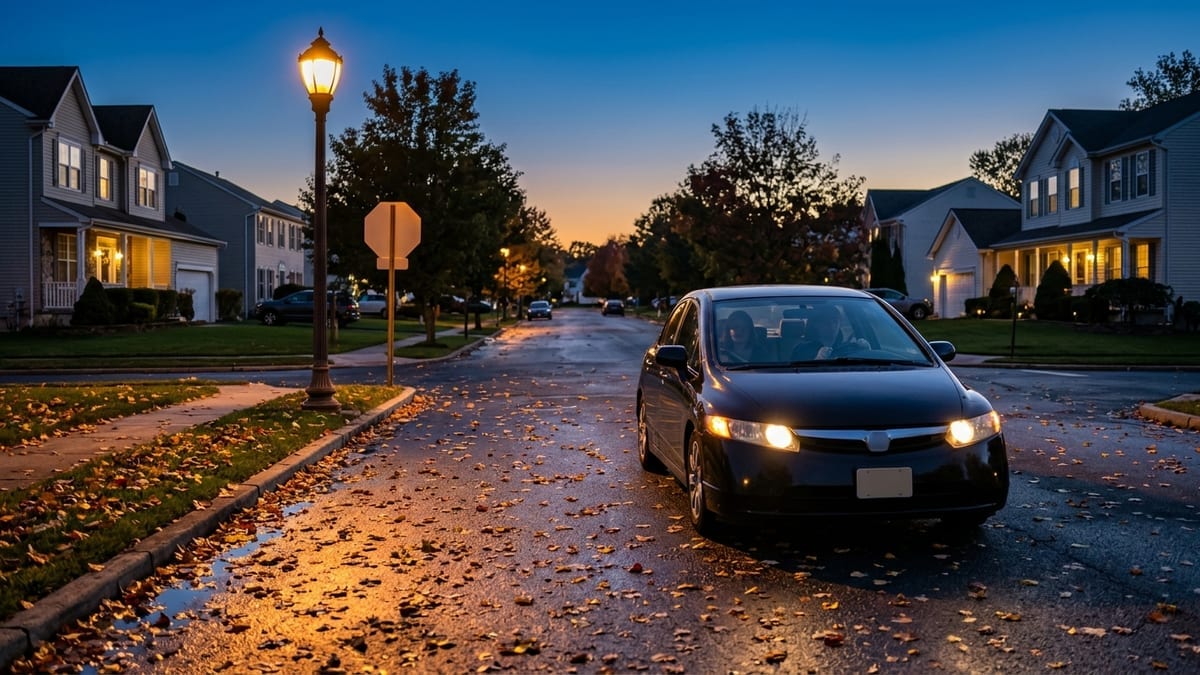
NJ permit drivers under 21 whose permit was issued on or after Feb 1, 2025 need at least 10 of their 50 supervised hours during darkness. Fall and winter make this easier because it gets dark earlier, so you can practice in the evening. Spread the night hours across the season and build skills in stages.
Key takeaways
- NJ permit drivers under 21 with permits issued on or after Feb 1, 2025 need at least 10 of their 50 supervised hours in darkness.
- Fall and winter bring earlier darkness, so night hours fit into evening trips you already make.
- Build night skills in stages: familiar streets, lit roads, unlit roads, highways, then night driving in rain.
- Spread short drives across the season instead of saving the darkness hours for the last month.
- No log goes to the MVC; a parent or supervising driver certifies the hours on Form BA-CSD.
Why plan night driving practice in fall and winter?
In fall and winter it gets dark earlier, so you can log night hours around dinner time instead of late at night. That makes it the easiest season to finish the hours in darkness without a rush.
In summer, darkness comes late. Night practice then often means driving when both the teen and the parent are tired. Once the clocks fall back, a short drive after school or work can count as darkness practice. You don't have to stay out late to get it done.
The season also brings conditions a new driver should see with a supervisor beside them: wet leaves, early sunsets, rain on a dark road and glare from oncoming headlights. Practicing these now, with help, is better than meeting them alone later.
How many night hours does an NJ permit driver need?
At least 10 of the 50 supervised hours must be during darkness. This applies to permit holders under 21 whose permit was issued on or after Feb 1, 2025 (NJ MVC press release).
| Requirement | What it says | Source |
|---|---|---|
| Who it applies to | Permit holders under 21, permit issued on or after Feb 1, 2025 | NJ MVC press release |
| Total supervised hours | At least 50 | NJ MVC press release |
| Hours in darkness | At least 10 of the 50 | NJ MVC press release |
| How hours are certified | Parent, guardian or supervising driver signs Form BA-CSD | Form BA-CSD |
| Minimum practice period | At least 6 months of supervised practice | NJ MVC young adult page |
For the full rule, see our guide to NJ's 50-hour supervised driving rule.
What counts as driving "during darkness"?
The MVC uses the phrase "during darkness." We have not seen the MVC set a specific clock time in the sources linked here.
A simple habit keeps your record honest: count only time when it is actually dark outside and headlights are needed. Bright dusk is not the same skill. If you are unsure about a borderline case, ask the MVC before you count it.
Why not leave the night hours to the last month?
Because cramming them in works against the skill and against your schedule. Night driving is harder than daytime driving, and it improves with repetition spread over weeks.
Here is why we suggest starting early:
- The timeline is fixed. A teen can get a permit at 16, needs at least 6 months of supervised practice and can be licensed no earlier than 17 (NJ MVC young adult page). If those months fall mostly in summer, darkness comes late every evening.
- Weather gets in the way. A stretch of storms or ice can wipe out the evenings you planned to use.
- Long sessions wear people out. A tired teen and a tired supervisor learn less, and the drive gets riskier.
- Night driving narrows once licensed. Probationary drivers may not drive from 11:01 p.m. to 5 a.m., with work and religious exceptions (NJ MVC GDL safety). Evening darkness is still allowed, and that is the driving a new license holder will do. Supervised practice now is the time to build it.
A season-long plan for the hours in darkness
Think in stages, not in one big block. Move to the next stage when the teen handles the current one calmly, not when a set number of drives is done.
| Stage | Where to drive | What to practice | Move on when |
|---|---|---|---|
| 1. Familiar ground | Your own neighborhood, quiet streets | Headlights on early, smooth stops, judging speed in low light | Stops and turns feel routine |
| 2. Lit, busier roads | Main roads with streetlights and stores | Reading signals at night, watching for pedestrians and cyclists | The teen scans without prompting |
| 3. Dark, unlit roads | Rural or wooded roads | High beams on and off, glare, watching road edges for animals | High beam switching is automatic |
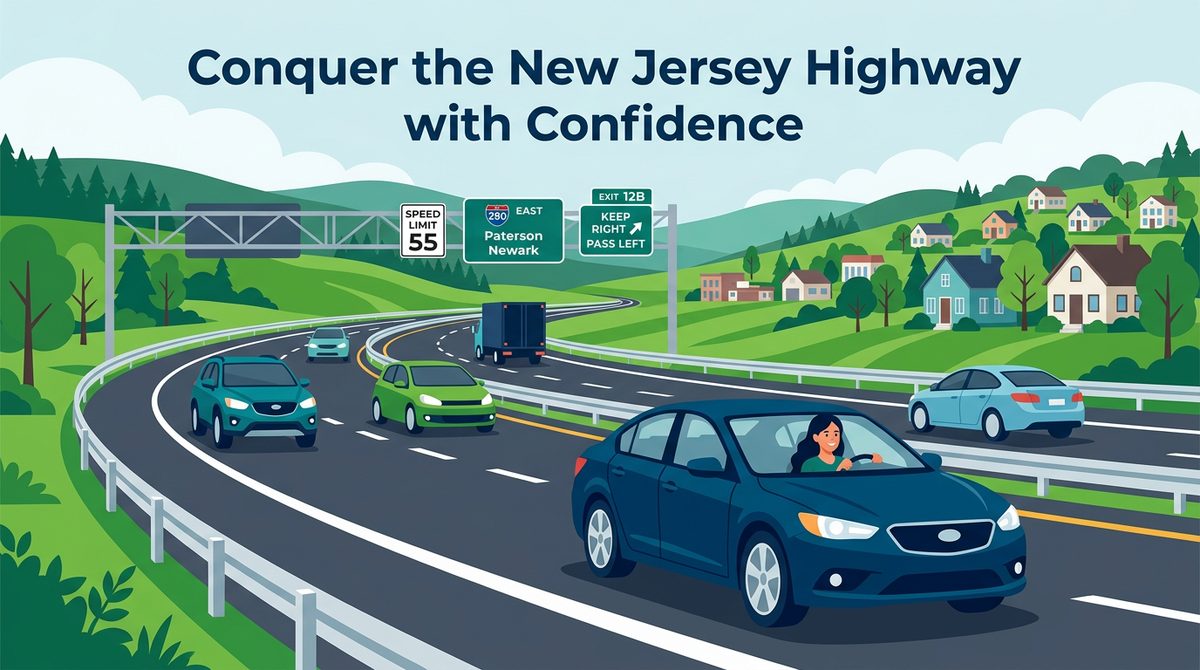
| 4. Highways at night | Highways with steady traffic | Merging, lane changes, following distance at speed | Merges are calm and well timed |
| 5. Night plus weather | Any road in rain or on wet pavement | Slower speeds, longer gaps, wipers and defroster use | The teen adjusts speed without being told |
Spread the sessions across the season
Short, regular drives beat one long night. Put a few evening drives on the family calendar each week, tied to things you already do: school pickups, errands or visits. Many night hours can come from trips you were making anyway.
Keep the hard stuff for later, not last
Save unlit roads and wet night driving for after the basics are solid. But don't save them for the final weeks before the road test. A teen should see these conditions more than once with a supervisor.
Try this: Tonight, look at your week and pick two evenings when you already have somewhere to go after dark. Let the permit driver take the wheel for those trips, and record each drive as soon as you park.
DriveSafer Teen Driving App
Log supervised driving hours and track NJ's 50-hour GDL requirement — all in one app.
Who can supervise night practice?
The supervising driver must be 21 or older with a valid NJ license (Form BA-CSD). MVC GDL pages also require 3 years of driving experience, though the form itself does not mention 3 years.
That means more than one adult can share the night hours. If one parent works evenings, another qualified adult can ride along. Spreading the work makes it easier to keep a steady pace through the season.
Before any drive, check that the two red reflective decals are on the front and rear plates. Permit and probationary drivers under 21 must display them, and they cost $4 a pair (NJ MVC GDL safety).
What should a teen practice in the dark?
Focus on the skills that change when light drops. Speed, distance and hazards all look different at night.
- Headlights. Turn them on early. Know when to use high beams and when to dim them for oncoming or leading cars.
- Glare. Look toward the right edge of the lane when a bright car approaches, then bring the eyes back to the road.
- Speed. Drive at a speed that lets you stop within the distance your headlights show.
- Scanning. Pedestrians in dark clothing and cyclists are hard to see. Check crosswalks and road edges often.
- Parking lots. Practice in a dark lot, where people walk between cars and lighting is uneven.
- Fatigue. Notice when focus slips. End the drive early if either of you is tired.
Talk briefly after each drive. Ask the teen what was hardest. That answer tells you what to work on next time.
How do you record night hours for Form BA-CSD?
Keep a record as you go, then a parent, guardian or supervising driver signs Form BA-CSD and presents it at licensure (Form BA-CSD). No log is submitted to the MVC.
The signature matters. A false certification brings a 6-month suspension (Form BA-CSD). The Share the Keys guide's own certification form is not accepted; only Form BA-CSD is (Form BA-CSD). Learn more in What is NJ Form BA-CSD?
A good record makes signing easy, because you can see the totals instead of guessing. Mark each drive as day or darkness so you know where you stand on the night hours well before the road test.
We built DriveSafer Teen for this. The app helps you keep a record; parents certify the hours on Form BA-CSD.
Try this: At the end of each month this season, check your darkness total. If you are behind your plan, add one extra evening drive per week rather than saving it all for the end.
Frequently asked questions
Do the 10 night hours count toward the 50 total?
Yes. The rule is at least 50 supervised hours, including 10 during darkness, so the night hours are part of the 50, not extra (NJ MVC press release).
Does the night driving rule apply if my teen's permit was issued before Feb 1, 2025?
The 50-hour rule, including the 10 hours in darkness, applies to permit holders under 21 whose permit was issued on or after Feb 1, 2025 (NJ MVC press release).
Do we send our night driving log to the MVC?
No. No log is submitted. A parent, guardian or supervising driver signs Form BA-CSD and presents it at licensure (Form BA-CSD).
Can a grandparent or older sibling supervise night drives?
Yes, if they are 21 or older with a valid NJ license (Form BA-CSD). MVC GDL pages also require 3 years of driving experience.
Can a new probationary driver keep practicing at night after getting licensed?
Probationary drivers may not drive from 11:01 p.m. to 5 a.m., with work and religious exceptions (NJ MVC GDL safety). Evening driving before that is allowed.
How does DriveSafer Teen fit with Form BA-CSD?
The app helps you keep a record; parents certify the hours on Form BA-CSD.
Sources
- NJ MVC press release on the 50-hour supervised driving rule
- NJ MVC Form BA-CSD, Certification of Supervised Driving
- NJ MVC young adult driver page
- NJ MVC GDL safety
Next step: Log the 50 hours with DriveSafer Teen (7-day free trial)
General information, not legal advice. Rules change; check the NJ MVC for current requirements.
Ready to start tracking your teen's practice hours?
Join hundreds of NJ families using DriveSafer to log drives and prepare for the road test.
Start Your Free Trial→