Indian Hills And Ramapo High School Make The Commitment To Drive Safer
The journey from learner to licensed driver is a significant one for any teenager, and for communities, it's a shared responsibility to ensure this transition is as safe as possible. Recognizing this vital need, schools within the Wyckoff, Oakland, and Franklin Lakes areas are stepping up to enhance driving safety for their students. Partnerships like these are crucial in fostering a culture of responsible driving from an early age, equipping young people with the knowledge and skills they need to navigate New Jersey's roads confidently and safely.
These collaborations often bring a wealth of resources to high schools, encompassing everything from educational materials to interactive assemblies and specialized programs for both teens and their parents. The goal is to bridge the gap between traditional driver education and the realities of driving once a license is obtained. While standard driver's ed teaches the rules of the road and how to operate a vehicle, the emphasis of these supplementary programs is on vehicle control and hazard recognition – skills that are often overlooked but are absolutely critical for safe driving.
It's a sobering fact that motor vehicle accidents remain the leading cause of death for teenagers nationwide, surpassing drugs, homicides, and suicides combined. Statistics from organizations like the Centers for Disease Control and Prevention paint a stark picture: an average of 11 teenagers between the ages of 16 and 19 lose their lives every day in traffic collisions. These alarming numbers are primarily attributed to a lack of driving experience before independent licensure and an insufficient focus on advanced vehicle control techniques during initial training. Teens learn how to drive, but often not how to react when things go wrong.
New Jersey, like many states, has a graduated driver licensing (GDL) program designed to ease new drivers into more complex driving situations. This includes restrictions on nighttime driving, passenger limits, and a mandatory supervised practice period. While incredibly valuable, GDL programs provide a foundational layer of safety. The real-world challenges young drivers face — sudden weather changes, unexpected road hazards, or the loss of traction — require a deeper understanding of vehicle dynamics and a practiced ability to respond.
This is where specialized programs focusing on car control become invaluable. Expertly designed courses, often taught by certified high-performance driving instructors, provide a safe and controlled environment for teens to learn how their vehicle truly responds under various conditions. Imagine a teen learning how to correct a skid, handle emergency braking, or execute evasive maneuvers before they encounter these situations on a busy New Jersey highway. These programs go beyond the basics, teaching teens to anticipate risks and develop the muscle memory needed to react appropriately.
Practical Tips for Parents of Teen Drivers:
DriveSafer Teen Driving App
Log supervised driving hours and track NJ's 50-hour GDL requirement — all in one app.
- Be a Consistent Role Model: Your driving habits directly influence your teen's. Demonstrate safe driving, avoid distractions, and always wear your seatbelt.
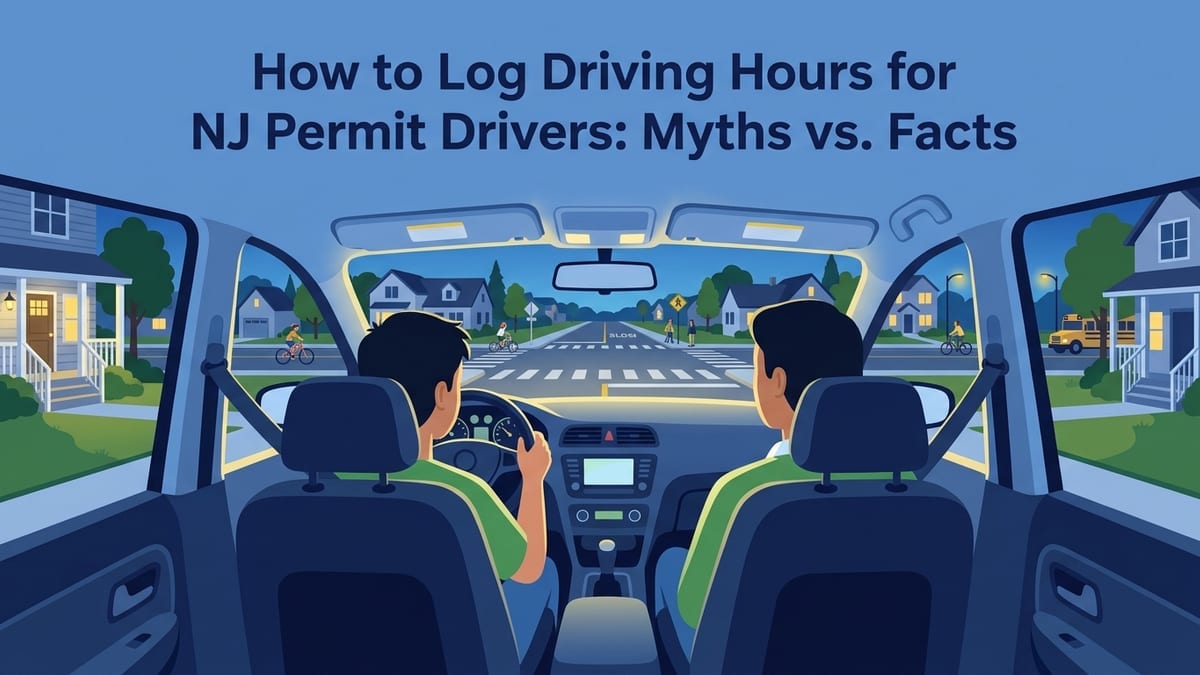
- Maximize Supervised Driving Hours: New Jersey requires a minimum of six months of supervised driving. Go beyond the minimum! The more diverse experiences (different weather, road types, traffic conditions) your teen gets with you in the passenger seat, the better prepared they'll be.
- Practice Defensive Driving Strategies: Discuss and practice scanning the road ahead, maintaining a safe following distance, and identifying potential hazards.
- Emphasize Vehicle Control: Beyond parallel parking, talk about and, in a safe environment, practice understanding how the car responds to braking, steering, and acceleration.
- Understand NJ's GDL Laws: Be thoroughly familiar with the New Jersey Graduated Driver Licensing restrictions, including passenger limits and nighttime driving curfews, and enforce them strictly. These rules are in place for a reason – your teen's safety.
- Enroll in Advanced Driving Programs: Seek out additional training that focuses on skid recovery, emergency braking, and hazard avoidance. These courses can equip your teen with critical life-saving skills not typically covered in basic driver education.
- Open Communication: Maintain an open dialogue with your teen about driving challenges, peer pressure, and the importance of making responsible choices behind the wheel.
By actively participating in their teen's driving education and seeking out opportunities for advanced training, parents can significantly contribute to developing more skilled, better prepared, and ultimately, safer young drivers in New Jersey and beyond. This collaborative community effort, involving schools, parents, and specialized programs, is vital in changing the troubling statistics and ensuring our young drivers arrive at their destinations safely.
General information, not legal advice. Rules change; check the NJ MVC for current requirements.
Ready to start tracking your teen's practice hours?
Join hundreds of NJ families using DriveSafer to log drives and prepare for the road test.
Start Your Free Trial→